


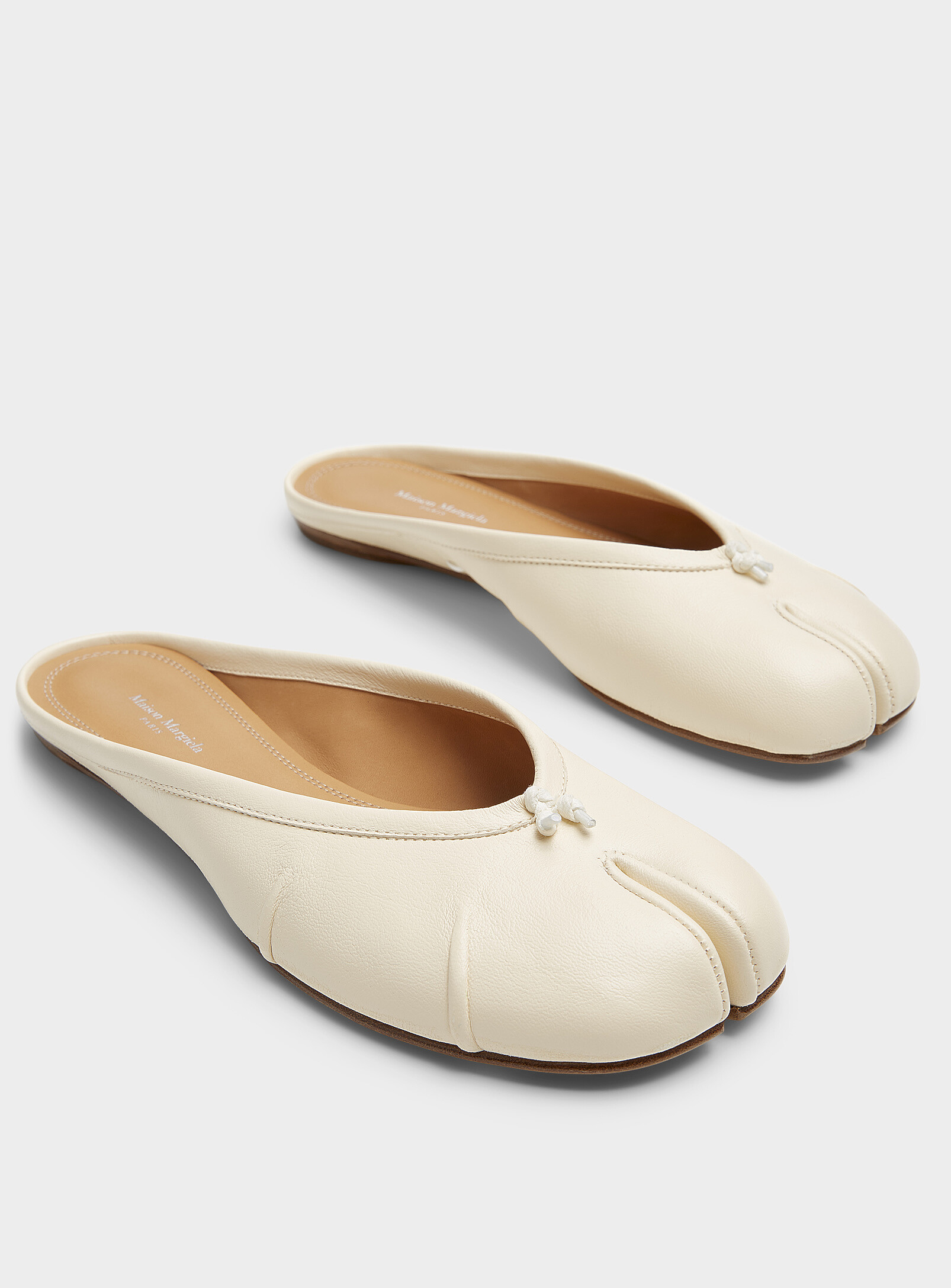
Japanese-style tabi (pronounced “ta-bee”) shoes seem like the “it shoe”. We can thank fashion brands like Maison Margiela for creating a cult-like following with the most influential fashion set. Having watched this curious style gain momentum in the past couple of years, we are pretty certain the split-toe style is here to stay. Having said that, it’s a style that actually never went away. In fact, it has been around for centuries.
Origins of the Japanese Tabi:
The tabi date all the way back to 15th-century Japan. Originally, they were more like socks than shoes—made of soft leather or cotton, designed to be worn indoors with traditional footwear like zori or geta (think flat sandals with a thong strap). The split-toe design? That was so they could wrap around the thong strap, like a hug for your big toe.
In those early eras, tabis were a sign of refinement. The elite wore them during formal occasions, and if you were fashioning white tabi, it meant you had a very comfortable life.

From Everyday to Runway:
The real twist in tabi history happened in 1989, when Belgian designer Martin Margiela launched his first collection in Paris and dropped the Tabi Boot—a split-toe, high-heeled leather creation that made the fashion world say, “Wait, what?”
Since then, tabi have become a favourite among avant-garde designers, sneakerheads, and people who are into minimalist style as well as those seeking more health benefits. Alongside Maison Margiela, brands like Nike and Suicoke have put their own spin on the classic split-toe silhouette. Just search up “tabi shoe” and you’ll find a wide range (and prices) from traditional Japanese shoe makers to independent Etsy artisans to fashion houses.
Healthy Benefits of the Traditional Japanese Tabi-style Shoe:
The average foot has 26 bones, 33 joints, as well as over 100 tendons, muscles, and ligaments. So, we need to pay attention to our footwear and the impact our shoes have on the whole.
The jika-tabi style, with its barefoot-like minimal design, is not only culturally iconic but also is known to have several potential health benefits for your feet, posture, and even overall body alignment. This includes: better toe mobility, posture support, strengthened feet, reduced foot pain, and improved balance and agility.

What To Look For:
Today, tabis are still worn by traditional Japanese artisans, kabuki actors, and even sumo wrestlers—often in white. But they’re also having a serious style moment with the fashion set straddling the line between heritage and high fashion.
If you’re seeking a Japanese tabi show, here are tips on what you should look for…
Size to fit snuggly, tabi are often designed to fit snugly for better foot articulation.
If you’re in between sizes, it’s often recommended to size up for jika-tabi.
If you’re walking long distances, look for light arch support or cushioned insoles.
A rubber sole is essential if you plan to walk outdoors often! The added grip and durability help to keep a firm footing on various terrains.
If you’re seeking it purely for style, you have many options, but go for quality!. It might take a moment to get used to the split-toe design, but friends I know who have the flat style swear they are super comfortable.
So, what do you think? Are you curious? Will you be adding these shoes to your fall wardrobe?