


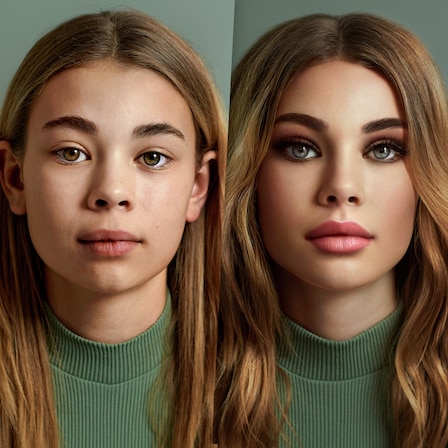
“You’re so pretty!” As kids, these words were not common for me or my sister to hear. But our parents never placed much emphasis on looks. The priority was always about being thoughtful, smart and trying harder before any compliments on appearance. To be fair, I always thought my sister was definitely the more thoughtful, smarter and prettier one between the two of us. This made me think about how compliments we give and receive can impact us beyond words. Enter Dove and its new #ChangeTheCompliment campaign.
I never really thought much about it until I became a mother myself. In the schoolyard, moms were praising their daughters and friends with sweet affirmations. I don’t think anyone really ever thought twice about these words. After all, we do believe these compliments come from a good heart. But when it’s all that girls hear, it can shape their self-worth.
Then, there’s social media — a space where compliments, comments, and comparisons flow freely, often tied to appearance. I can recall one mother boasting about her 17-year-old daughter’s social media following. Her daughter was very pretty and full of that effortless youth. I smiled and nodded, but really wanted to ask, “Yes, but maybe understand why hundreds of likes are so valued and why that makes you and her so happy?”
According to Dove’s 2024 Real State of Beauty report, more than 60% of girls feel pressure to be beautiful. By adolescence, half say they dislike something about how they look.
Being told “you’re pretty” can equate with being valued, especially when you’re young. But does it ever stop? As adults, we’re still looking in the mirror and wishing something were different. We’re still comparing and chasing an impossible image of what we perceive as perfection.
I’ll admit that I’ve fallen into that trap, too. It’s hard not to. I’m constantly noticing what I could “fix” on the outside. And to say it doesn’t affect how I feel on the inside? I would be lying.

Time to #ChangeTheCompliment
I had learned about how Dove recently launched a campaign to encourage us to rethink how we talk to, and about, young girls — to #ChangeTheCompliment. I have been making a conscious effort to start compliments that lead with other wonderful qualities in others at any age. Yes, we all love to hear that we have cute kids or we look good for our age (that’s a story for another day), and there’s nothing wrong with that, but let’s consider prioritizing other amazing aspects as well.
The reason why I’m all in with this campaign is that it’s encouraging us to think and celebrate qualities like kindness, creativity, courage and strength — and reminding girls what their bodies can do — when we give them more reasons to feel confident.
I recently had the opportunity to interview Dr Vanessa Lapointe, a registered psychologist, author, educator and founder of The North Star Clinic in B.C., to learn more. With over 20 years of experience, she boasts deep expertise in child development and family-centred care.
Often, many of us slip into a compliment that begins with appearance, and we may not even notice. What is your experience, and what message do you think it sends to a young child?
Dr Vanessa Lapointe: I do think that is true, and we often do not notice because many of us were socialized the same way. The first thing people comment on is something external. When children are praised for how they look on the outside and are not celebrated for who they are on the inside, they can quickly onboard the message that appearance is what matters most. More concerning, they may begin to believe that to be loved and accepted, they have to keep up appearances. That becomes a significant issue over time, and many adults spend years recovering from it.
Confidence is often linked to beauty. How do we, as parents and adults, reshape this narrative and #ChangeTheCompliment?
Dr Vanessa Lapointe: Ideas about beauty vary across cultures, which shows how socially constructed they are. If we want to reshape the narrative, it starts with a shift. Call out qualities like courage, kindness, dedication, effort, and the light they bring to others. That pivot helps confidence grow from character and capability rather than from appearance. That’s why Dove’s recent #ChangeTheCompliment campaign resonated with me – it’s not about removing appearance-based compliments altogether but giving girls even more reasons to be confident by celebrating the qualities that make them who they are.

Why is it important to shift this type of compliment, even if we think it is positive?
Dr Vanessa Lapointe: Because appearance focuses on what is largely outside our control. None of us chose the size of our nose or the thickness of our hair. What we can influence are our inner qualities. I can choose to be kind, brave, and hardworking. If we link confidence to an internal locus of control rather than an external one, we set children up to thrive.
This is not just happening for girls, but also for boys. What have you noticed?
Dr Vanessa Lapointe: Historically, appearance-focused messaging targeted girls more directly. Increasingly, boys are receiving it too, often influenced by social media ideals about the “perfect” male body. Even if boys were not always complimented on appearance, they have watched girls receive those comments and absorbed the same messages. This is a growing issue for boys as well, and we need a broad rethink of how we speak to all children.
A compliment can also affect behaviour. What are your thoughts?
Dr Vanessa Lapointe: Compliments can become a self-fulfilling prophecy. We lean toward what we are praised for. If I am applauded for being the life of the party, I will likely lean into that. If I am applauded primarily for appearance, I may pour disproportionate energy there without asking whether that is where I want my energy to go. Adults can reflect on this. Children often cannot. So we want to steer our praise toward qualities and efforts that build them up from the inside out.
Social media plays a big part in shaping body image. How can we help kids and teens navigate this world without feeling their worth is measured by likes and filters?
Dr Vanessa Lapointe: Dove’s research shows that by adolescence, more than 60 percent of girls feel pressure to be beautiful, and that one in two dislikes something about their appearance. That’s a tough reality, especially given the media landscape they’re immersed in every day.
When it is time to introduce social media, be clear about what it is and what it is not. Learn together how platforms and algorithms work. Teach kids to curate their feeds, call things what they are, and choose content that fills them up rather than drains them. We want them to enter social media with eyes wide open.
We need to start somewhere. What tips can help #ChangeTheCompliment?
Dr Vanessa Lapointe: You do not need to throw out every appearance comment. The key is to prioritize compliments that go beyond what the eyes can see. Make it playful and consistent:
☀️ In the morning, notice and name something about your child’s actions or character from the day before.
🖍️ Leave a dry-erase note on the bathroom mirror about an inner quality you admire.
🍽 Around the dinner table, invite everyone to share something they appreciate about each person that cannot be seen from the outside.
🚀 Small shifts, repeated often, build confidence for life.
What can you tell us about the Dove Self-Esteem Project?
Dr Vanessa Lapointe: The Dove Self-Esteem Project is a wonderful place to start. It offers free, evidence-based tools created with psychologists and body image experts to help adults support the young people in their lives. Whether you’re a parent, teacher, coach or caregiver, these informative resources are designed to build confidence in ways that are practical and age-appropriate.
Any final tips on how to #ChangeTheCompliment?
Dr Vanessa Lapointe: Take a thoughtful approach rather than rushing. Get curious about who your children are so that you can arrive in future interactions full of ideas for inner-focused compliments. The more present and reflective we are, the more naturally these compliments will come.
Want to learn more about how to #ChangeTheCompliment? Visit the Dove Self-Esteem Project. There is a great section on Social Media and Self-Esteem that is worth a read, whether you’re a parent or not.
*Thank you, Dove Canada, for also proving that our voices matter as women and as parents. This interview post is sponsored with mutual respect.